
Research Content
By combining AI, data science and simulation, we tackle complex social challenges and design the society of the future.
Build an artificial society
Model agents and environments in virtual space to create the foundation of a society
Analyze the present
Use data science to deeply understand and extract the current state and structure of social problems
Support decision-making
Create diverse future societies through simulation, verify policy effects and contribute to institutional design

Artificial Society
Reproducing real cities in a virtual space
What Is an Artificial Society?
An artificial society is a virtual society constructed inside a computer. If information about the people in the real world could be used, an artificial society could be built with ease. However, for reasons of personal data protection and privacy, using information about actual individuals is not permitted. For this reason, we conduct research on constructing artificial societies using only publicly available information, such as official statistics and open data. We have already succeeded in generating the attributes of individuals for all of Japan, and we are currently pursuing research toward realizing an artificial society in which individuals act, using generative AI.
Example Research Topics
- Developing a Method for Assigning Personalities to Synthetic Population Data for LLM-Driven Social Simulation
- Assigning National Pension Beneficiaries and Benefit Amounts to Synthetic Population Data
- Building Use Classification Using Deep Learning: Toward Improving the Accuracy of Address Information in Synthetic Population Data
- Synthesizing Prefecture-Level Microdata That Accounts for Municipal Statistical Tables
Data Science
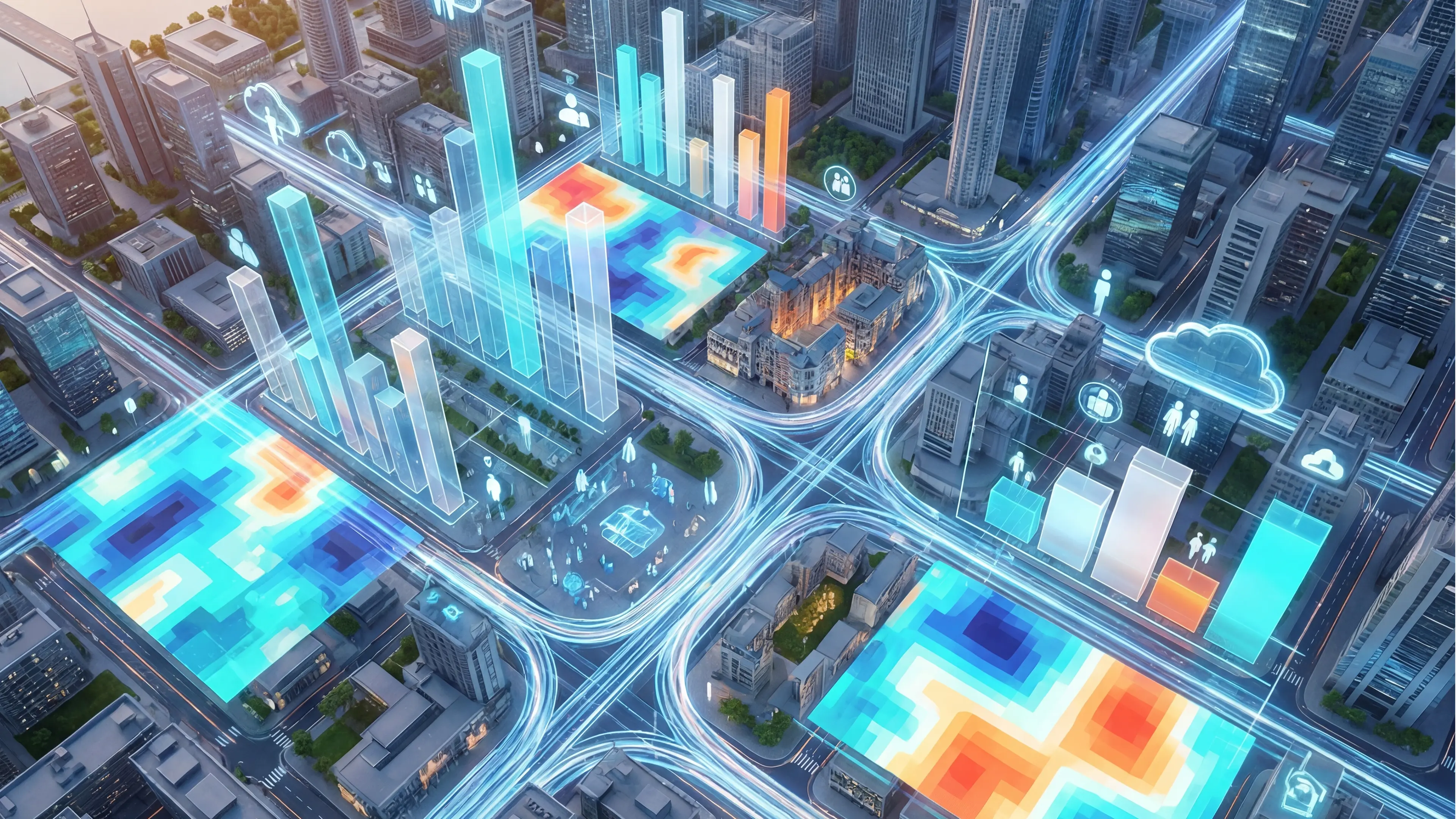
Analyzing the current state of society with data science
Integration with Data Science
To run a simulation, we first need to know what is causing a social problem and how it can best be improved. To this end, we analyze the current state of society using real data and artificial societies, and identify the issues to be addressed.
Example Research Topics
Mobility
Education
- Analyzing the Impact of Elementary School Consolidation on Children's Commutes to School
- Estimating the Number of Hidden Waitlisted Children for Childcare in Japan
Disaster Prevention
Healthcare
Simulation
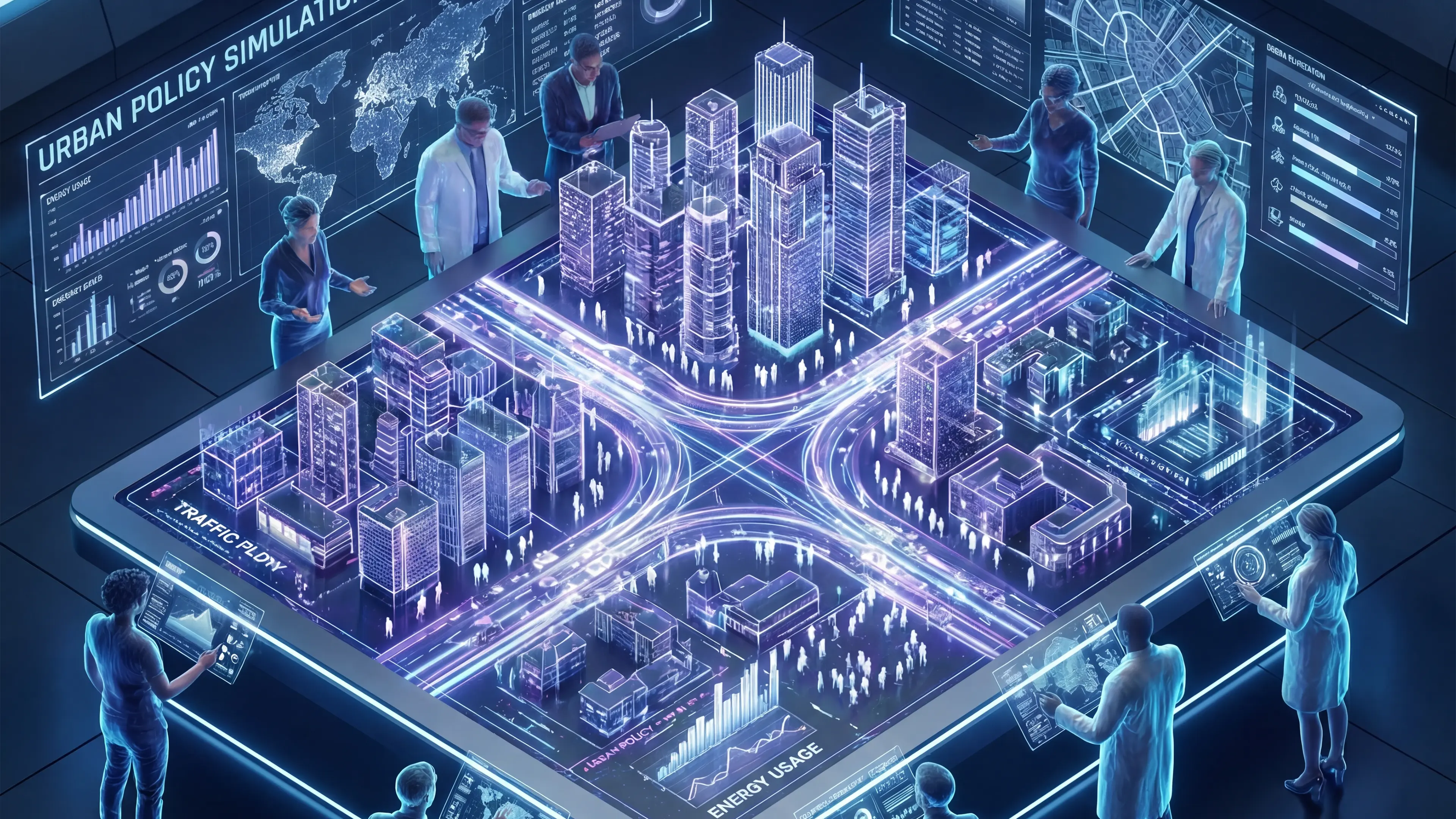
Evaluating policies and institutions through simulation to support decision-making
Evaluation through Social Simulation
We design policies and institutions to address the issues identified through data science, and evaluate their effects through simulation. We also explore ways of presenting the policies and institutions examined in our simulations, and even develop games, in order to communicate them.
Example Research Topics
Mobility
- Verifying the Introduction of Ride-Sharing to Secure Means of Transportation in Depopulated Areas
- Examining the Profitability of Demand-Responsive Buses through Simulation
Disaster Prevention
Healthcare
One Quadrillion Simulations
to Confront
Social Challenges
A video produced by the university's public relations office (in Japanese). It gives an accessible overview of our research themes.